
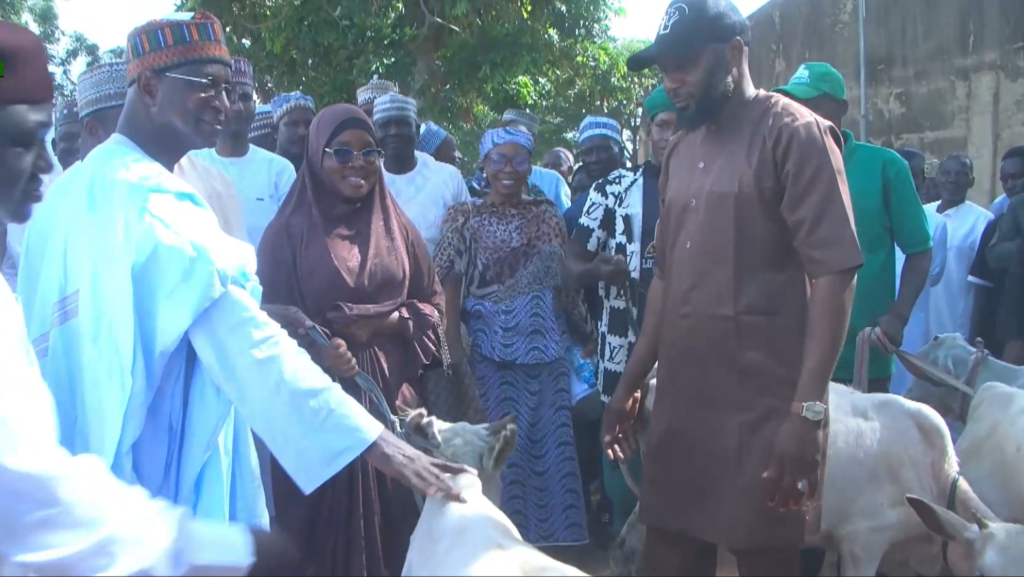
The Federal Government has launched a nationwide livestock empowerment programme targeted at women and young Nigerians, with the distribution of heifers and bullocks aimed at boosting livestock production, creating jobs and reducing poverty.
The initiative, launched in Yola, Adamawa State, is part of the Federal Government’s Renewed Hope Livestock Support Programme, designed to expand economic opportunities and strengthen Nigeria’s livestock sector.
Speaking at the launch, the Minister of Livestock Development, Idi Mukhtar Maiha, said the programme is intended to provide beneficiaries with productive assets that can help them establish sustainable livelihoods while contributing to the country’s food production.
The government believes that supporting young people and women to participate actively in livestock production could help address unemployment and improve household incomes, particularly in rural communities where agriculture remains a major source of livelihood.
Beyond the distribution of animals, however, the success of the programme will depend on sustained support for beneficiaries. Access to veterinary services, animal feed, improved breeding, training, finance and reliable markets could determine whether recipients are able to turn the livestock into viable and sustainable businesses.
For many young Nigerians facing limited employment opportunities, livestock farming could provide an alternative pathway into entrepreneurship. Properly managed, the sector has the potential to generate jobs not only through animal production, but also across the wider value chain, including feed production, veterinary services, transportation, processing, marketing and dairy production.
The programme also comes at a time when Nigeria is seeking to increase domestic food production and reduce dependence on imports. Expanding livestock production could therefore contribute to food security while creating new economic opportunities for communities across the country.
However, questions remain over how beneficiaries will be selected, how the animals will be monitored and what measures are in place to ensure that the support produces long-term economic benefits.
As the Federal Government expands its livestock development agenda, the key question is whether the initiative can move beyond the distribution of animals to create sustainable businesses and lasting employment opportunities for Nigeria’s growing youth population.
Can livestock empowerment become a sustainable pathway to jobs, food security and poverty reduction for Nigerian youth?